At first, Gaussian splatting can look like a slightly imperfect panorama. Turn your head and you see a room. Some edges look soft. Why not just take a better panoramic photograph?
The difference appears when you change position. Move sideways past a column. Approach a doorway. Look around the edge of a sofa. Nearby objects shift against distant ones, and previously hidden parts of the space come into view, where the capture has covered them.
That positional freedom is what makes a good Gaussian splat worth exploring. The examples below give you a way to judge it yourself.
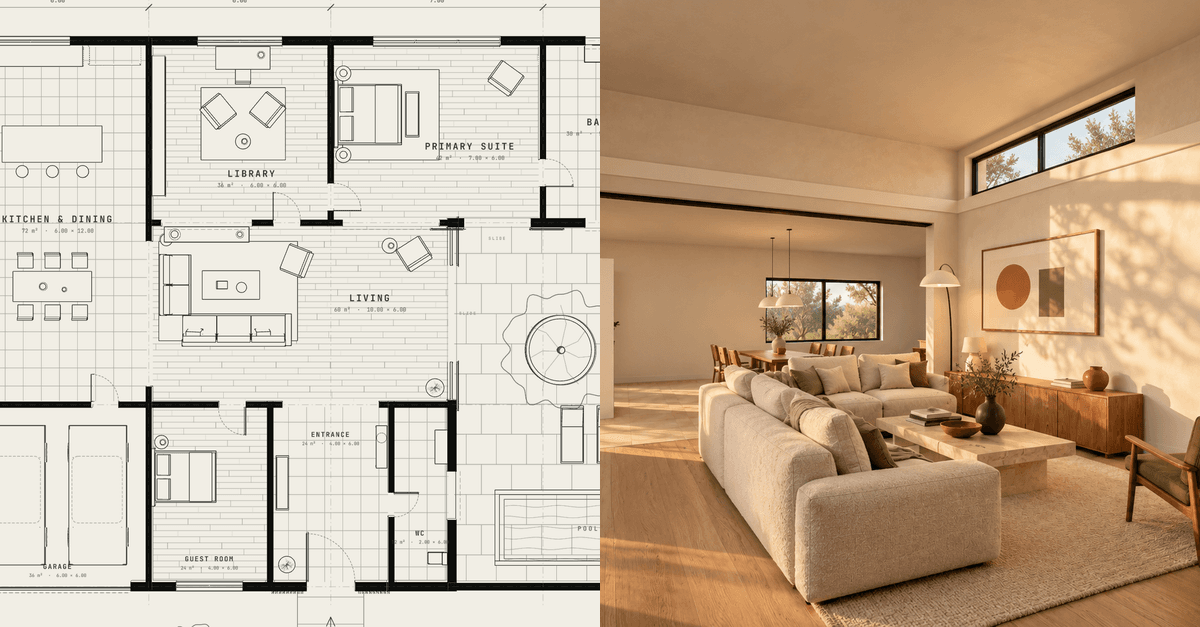
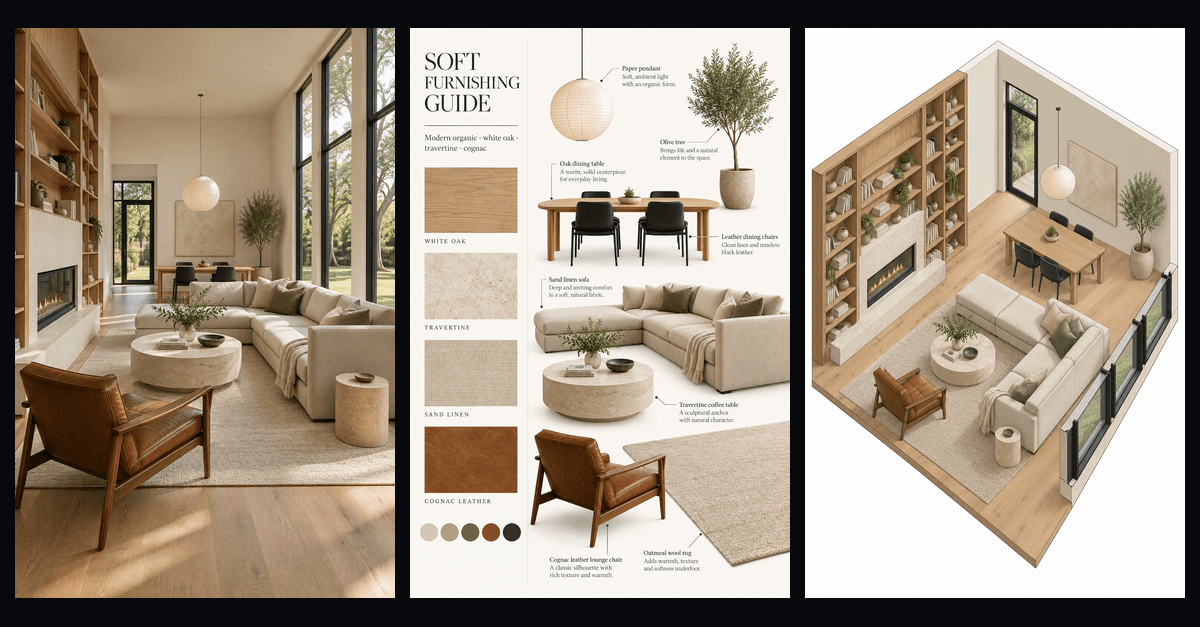
The cover is an original AI-generated concept illustration. The interactive scenes belong to their credited creators and are displayed through SuperSplat's hosted viewers. They were not generated by Astravisualize Studio. We are linking and embedding published experiences, not offering the underlying assets for reuse or claiming an open commercial asset license.
Explore the spaces
Start with the Gothic church. Then try a home, where familiar furniture and doorways make the change in viewpoint easier to read. Each example includes something specific to look for.
Use the viewer's help to find its navigation controls. Fullscreen can make the experience easier to follow. These scenes can be demanding on a phone or an older computer. Close the viewer to release it before continuing to read, or use the original scene link if an embed does not work on your device.
Interactive scenes hosted by SuperSplat. On desktop, the first viewer loads when it comes into view. Other scenes load only when you choose them. Opening a scene closes the previous viewer. On phones, tap to load any scene.
Gothic Church, Kefermarkt
Look up at the vaults, then move sideways past a column. The foreground should shift against the space behind it.
2508 Paramount House
Follow a doorway into the next room. Watch how the furniture overlaps change as your position changes.
HAUZ, Portal do Sol Green
Explore the connections between spaces. A continuous move reveals more than a collection of fixed viewpoints.
Presidential Suite, Hilton Hotel
Compare the impression from across the room with the detail close to furnishings and edges.
Seven Park, Miami, Unit
This is a synthetic architectural scene converted to splats. Compare its controlled lighting with the captured spaces above.
What each example tells us
Gothic Church, Kefermarkt, by schindelar3d, demonstrates the appeal of captured architecture: a tall, detailed interior with strong depth cues. In the original scene's comments, the creator describes using a Sony Alpha A7R IV, RealityScan for alignment and Postshot for training. That is a capture and reconstruction workflow, rather than a room invented from a text prompt.
2508 Paramount House, by cameroncone, brings the same idea into residential space. The creator describes capturing areas separately, processing and compressing them, and combining them into the house. The published workflow notes mention camera equipment, RealityCapture, Postshot, SuperSplat and cleanup in Cinema 4D. The result should not be mistaken for an instant conversion from a listing photograph.
HAUZ, Portal do Sol Green, by erick_plankus3d, uses a different capture setup. The creator's notes identify an XGRIDS L2 Pro and describe slow passes at different heights, processing in LCC Studio, cleanup and color adjustment, and collision added through the SuperSplat workflow. Coverage and careful capture still matter.
Presidential Suite, Hilton Hotel, by wu3d, is a useful hospitality example. The scene page does not document the capture equipment or training pipeline. We have not inferred those details from the appearance of the result.
Seven Park, Miami, Unit, by sa3d, shows another route entirely. Its description identifies synthetic digitalization using 3ds Max, Corona and LichtFeld, and credits copyright to stepinc.co. A rendered architectural environment can supply the views used to create a splat. A beautiful splat does not necessarily begin with a scanned real building.
What is Gaussian splatting?
A Gaussian splat represents a scene with many soft, oriented elements in space. Each has properties such as position, shape, opacity and appearance. Projected into the camera view and blended together, they form the image you see.
In a typical reconstruction workflow, source photographs or video frames cover the space from different viewpoints. Camera alignment estimates where those views were taken. Training then adjusts the scene representation to reproduce them. The source views can also be rendered from an existing digital environment. PlayCanvas's creation guide explains both routes.
The process does not guarantee a complete, measured building model. A surface that was never captured may be missing or unreliable from an unfamiliar viewpoint. Mirrors, glass, thin details and moving subjects are useful places to inspect rather than assume perfection.
Gaussian splatting versus a panoramic tour
| Experience | What happens when you move? | What to inspect |
|---|---|---|
| A panorama from a fixed capture point | You rotate the view from that point. A tour can jump between separate points. | Image clarity and the transitions between viewpoints. |
| A Gaussian splat | You can change camera position continuously within the reconstructed space. | Parallax, capture coverage and detail away from the original views. |
| A conventional mesh scene | You move through explicitly modeled surfaces and objects. | Geometry, materials, lighting and the controls built around the model. |
If the experience only asks you to rotate in place, a sharp panorama may be enough. A splat earns its place when the movement itself reveals something: the depth of a room, a connection between spaces, or the relationship between a column and the architecture behind it.
Visual realism is also different from editability. A convincing scan does not automatically provide clean wall objects, selectable furniture or a lighting setup you can freely change. Navigation and collision are additional parts of the experience. The SuperSplat documentation describes how published viewing experiences combine the scene with cameras, annotations and optional collision.
Can a room photo become a space like this?
A single photograph does not contain the backs of its furniture or the room beyond the camera. A system that predicts those unseen areas is making an inference. That may be useful for an imagined concept, but it is different from documenting a real property with overlapping views.
For a captured walkthrough, plan the capture around where visitors will move. For a synthetic walkthrough, start with a coherent digital scene and render the required views. In both cases, inspect the result from the positions a visitor will actually use.
Where Astravisualize Studio fits
Gaussian splatting helps you explore a captured or prepared space. Astravisualize Studio helps you visualize a proposed change in an image: a different finish, a room style or a new design concept.
Studio currently does not reconstruct, import or edit navigable Gaussian splat scenes. Its floor-plan-to-3D feature creates an illustrative image, not a measured or walkable model. A generated camera-movement video is also a video, not an interactive reconstruction.
You can explore our separately built floor-plan walkthrough demo, or read how we made it. That demo uses a conventional Three.js scene. It is a different approach to showing space.
If your question is “what would this room look like with a different material or style?”, start with your own photo in Studio. If your question is “what does it feel like to move through the existing building?”, the capture examples above show why a spatial reconstruction can be useful.
Sources and scene credits
The scenes remain hosted by SuperSplat and may change or become unavailable. The creators retain their respective rights. No affiliation with or endorsement of Astravisualize is implied.
- Gothic Church, Kefermarkt, schindelar3d.
- 2508 Paramount House, cameroncone.
- HAUZ, Portal do Sol Green, erick_plankus3d / Plankus.
- Presidential Suite, Hilton Hotel, wu3d.
- Seven Park, Miami, Unit, sa3d. Copyright credited to stepinc.co on the source page.
- Creating Gaussian splats, PlayCanvas.
- SuperSplat scene pages and embeds, PlayCanvas.
- gaussian-splatting
- architecture
- interiors
- 3d-walkthrough
- reality-capture