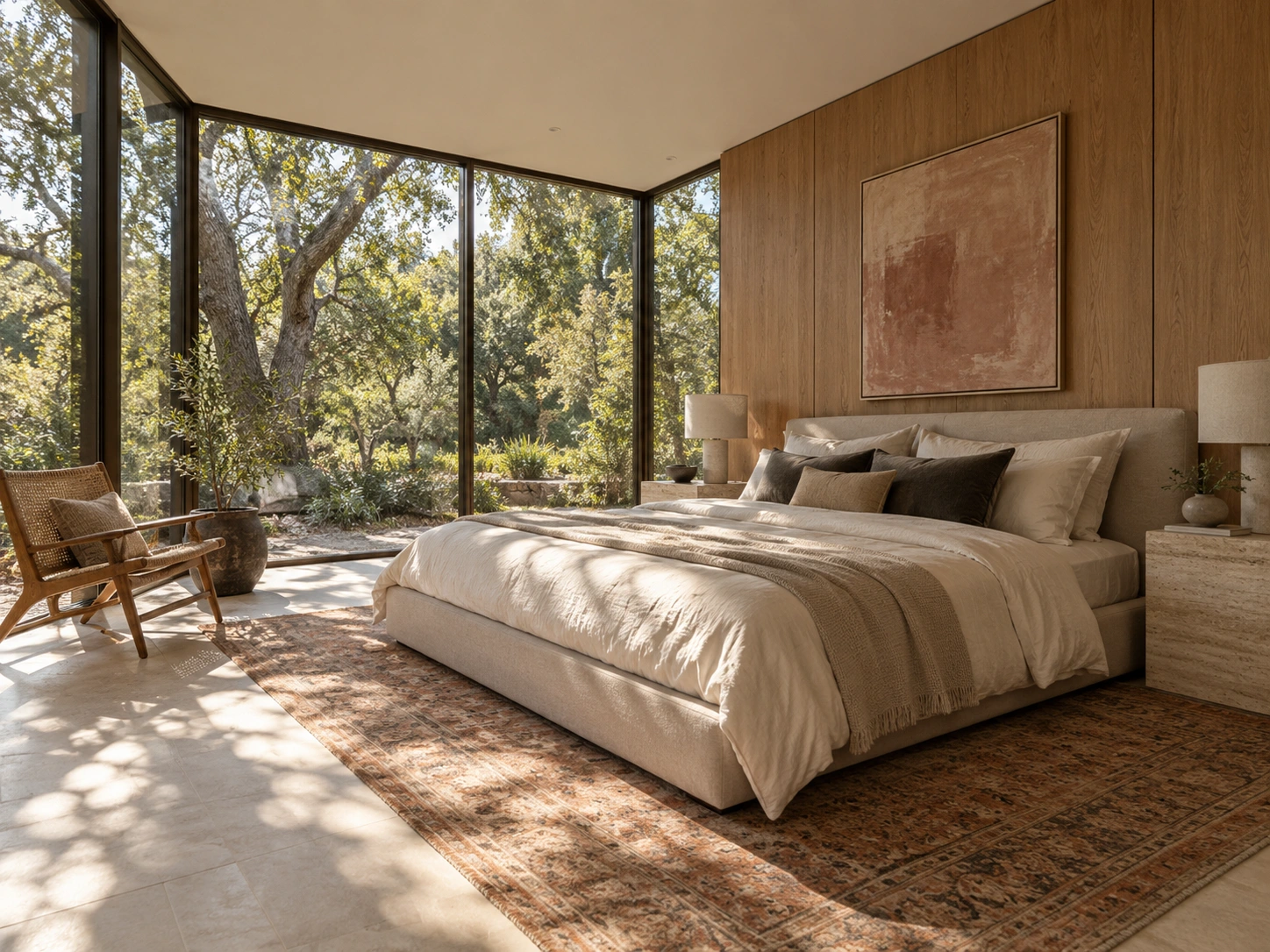
Edit the uploaded interior image to create stronger, believable natural light and shadow while preserving the room itself. First identify the visible windows, glazed doors, skylights and other existing daylight openings. Use only these openings as the sources of daylight. The direction, angle, width and reach of the light must be consistent with their location, size, height and orientation. Do not invent an unseen window, sunbeam or light source to make the composition more dramatic. Keep the original camera position, viewing direction, lens perspective, crop and aspect ratio. Preserve every wall, ceiling, floor, opening, frame, curtain, built-in, piece of furniture, decorative object and plant. Keep their count, geometry, scale, position and orientation. Do not redesign, restyle, add, remove or move anything. Preserve the actual material assignments and underlying colors; only their appearance under the new light may change. Strengthen sunlight entering through the existing glazing. Create readable pools of daylight and natural transitions into shade. Project window-frame shadows only where the source has matching mullions or frames, with correct perspective and obstruction by the room. If curtains are present, filter the light through their actual fabric; do not add curtains or invent a blind pattern. Cast shadows from existing furniture, plants and architectural edges in the same coherent direction. Let the scene's openings determine the lighting: light from a side opening should travel into the room from that side; a visible rear window should create believable backlighting toward the camera. Do not assume an off-camera opening unless the source clearly establishes it. If the openings cannot be determined, keep the source light direction and improve exposure gently instead of fabricating dramatic sunlight. Use physically plausible bounce light, contact shadows and restrained reflections. Keep shadows softer with distance from the casting object and let sheltered areas remain naturally darker. Add enough contrast to reveal depth without blocked blacks, blown-out windows, orange color casts, glossy floors, exaggerated HDR or artificial haze. Reveal the existing fabric, timber and stone textures without changing their finishes or oversharpening them. Return one photographic relighting of the same room, at the same framing. No collage, detail panels, text, arrows, people, watermarks or interface elements. The edit should look like a convincing photograph taken with better natural light, not a remodeled room.
Design PromptsOriginal source image generated by Astravisualize with built-in imagegen for this example. Also available as the Studio sample. Download Sunny bedroom sourceOriginal example generated by Astravisualize with built-in imagegen from the source above using this prompt. Not a Studio output.
Interiors
Rainy-day Interior
Give the same room soft rainy-day light, subtle rain on the existing glazing and a calm atmosphere while keeping the interior dry.
Sunny bedroom source
Rainy-day atmosphere
How to use this prompt
- Upload a room photo or render with an exterior view through a window or glazed door.
- Keep the room and its layout fixed. The prompt changes outdoor weather, transmitted daylight and the glow of an existing lamp only.
- Check that rain stays outside, glass remains transparent and furniture or matte floors have not become wet or glossy.